
My mission as a Mental Performance Coach (MPC) is to create a SPARCCC within all my athletes/performers and to help them light a SPARCCC within each other. The SPARCCC that is lit within my mental performance coaching program is one of (S)elf-determination, (P)assion, (A)ttitude, (R)esilience, (C)ommunication, (C)ommitment, and (C)oncentration. If we can all learn these invaluable lessons and live/play by them, we will succeed in whatever goals we set for ourselves. This SPARCCC will not only help you be successful in sport/your performance area, but life in general.
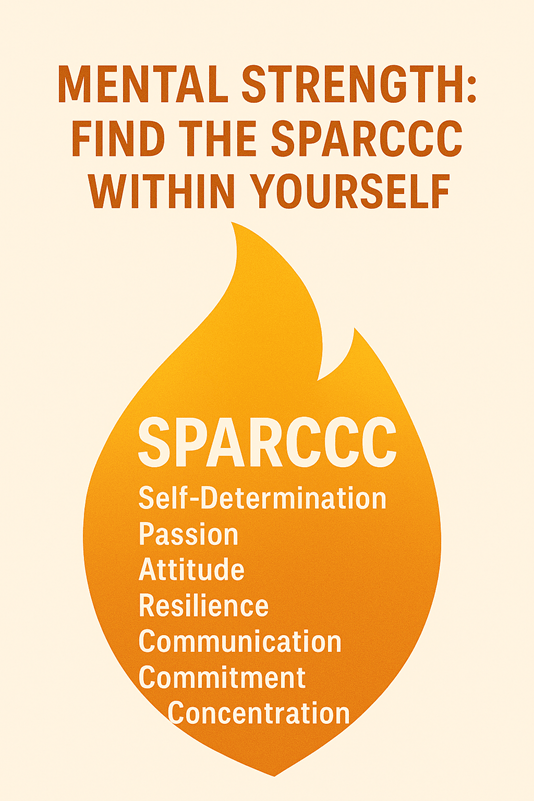
TEACHING MENTAL STRENGTH: Helping Athletes Find the SPARCCC within Themselves
-Self-determination: Based on SDT (Ryan & Deci, 2000).
- Autonomy: I support goal setting and decision-making. Athletes/performers must feel empowered to lead their own journeys, set goals for themselves, create action plans, and make effective decisions.
- Competence: I help athletes/performers/coaches build internal confidence based on effort and growth—not outcomes.
- Relatedness: I teach assertive communication and help teams prioritize team bonding and coach-athlete relationships, which includes effective conflict management skills.
-Passion: I help athletes identify their “why,” align goals with values, and maintain intrinsic motivation (Seligman, 2012; Ryan & Deci, 2000; Vallerand, 2015).
-Attitude: I foster positivity and gratitude to enhance team culture and overall well-being. I encourage and teach energy-giving behavior and kindness practices. (Gilbert, 2016; Gabana et al., 2020).
-Resilience: I teach athletes to learn from adversity and use coping tools like breathwork, visualization, mindfulness, and self-talk (Fletcher & Sarkar, 2012; Williams & Krane, 2021).
-Communication: I promote assertive communication and use role-play to strengthen connection and clarity. I teach conflict management skills (Ryan & Deci, 2000; Vallee & Bloom, 2016; Zuleger & McGuire, 2021).
-Commitment: I support athlete/performer/coach investment through meaningful goals, challenges, support, and consistency (Scanlan et al., 1993).
-Concentration: I often use Dr. Cook’s model—Observe, Strategy, Visualize, Trust—to train focus and presence (Thompson et al., 1998).
My Services
If you would like some support/help as an individual (athlete, or other type of performer) or you are a coach and would like some support/help yourself or for your team, please reach out by going to my contact page. Currently, I am only doing virtual services, but that may change in the future. I do individual mental strength training sessions, team sessions, presentations to coaches and other staff, brief solution-focused as needed sessions, etc. my services are not counseling, they are mental performance coaching. Please click on the links on my website to learn more about mental performance coaching and mental strength training. I fully believe that every person can benefit from mental strength training. In brief terms, mental strength training is building the mental skills to navigate life‘s ups and downs and reach excellence/success in any performance areas you are pursuing.
 SPARCCC Mental Performance Coaching